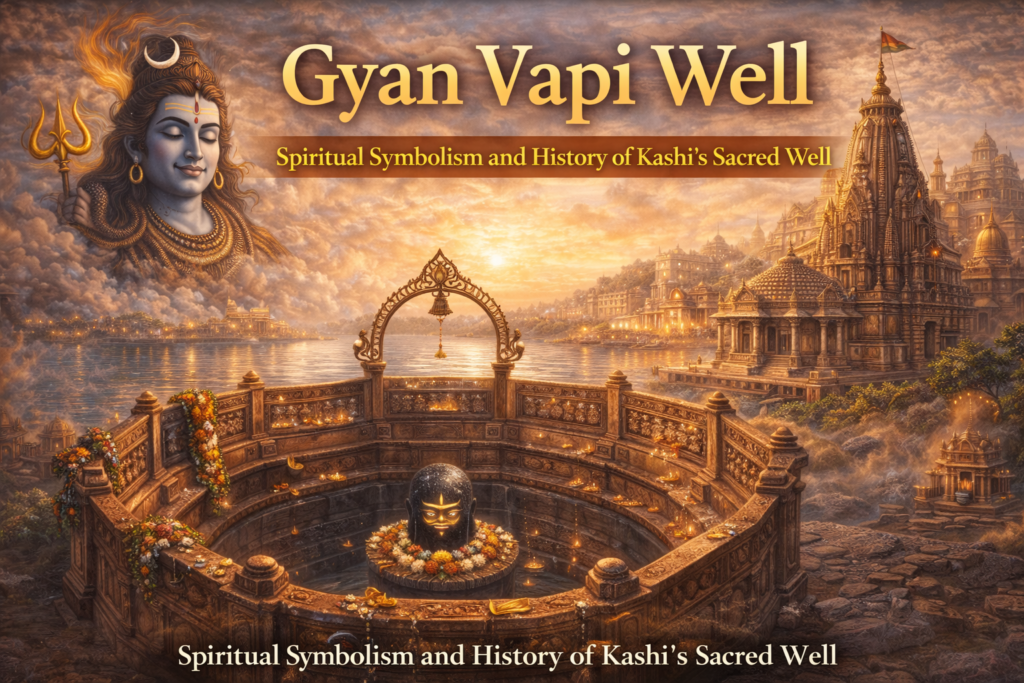
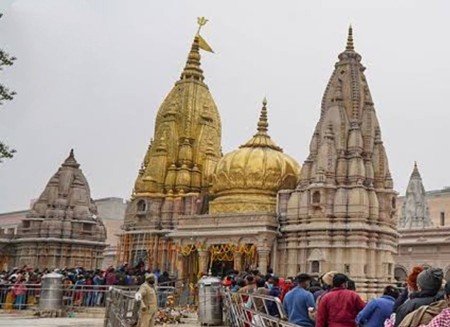
The Gyan Vapi Well, found in the sacred grounds of the Shri Kashi Vishwanath Temple in Varanasi is much more than a historical building or architectural aspect. It has been an unspoken spiritual protector century old, with strata of faith, strength and mystical power that keep attracting seekers, academics and religious devotees. Gyan Vapi itself is an experience of this greater spiritual strength of Kashi as a city that is out of time, out of conflict, out of change.
Historical Foundations of Gyan Vapi of Kashi.
The name of the Gyan Vapi means, the Well of Knowledge, the name of which itself shows the spiritual significance which was assigned to this old building. Historical accounts indicate that the well is older than most of the other structures around it, and has been incorporated into the religious topography of Kashi since the times immemorial. In times of foreign invasions and of the destruction of temples, especially in medieval times, it is generally assumed that the original Jyotirlinga of Lord Vishwanath was secretly concealed in the Gyan Vapi well to avoid being desecrated.
This was not a preservation act; it was a spiritual act of deep intendment. Hindus do not consider sacred energy as confined to what can be seen. By keeping the Jyotirlinga in the well, worshipers guaranteed the constant presence of the deity even in those times when buildings were in danger. So, the Gyan Vapi was symbolic of spiritual survival, where in the depths of the surface the flow of faith went on.
Gyan Vapi as a Spiritual protecter, Not a Building.
Gyan Vapi is not an ordinary well as it is a religious reservoir, unlike ordinary wells which are used on a utilitarian basis. Believers think it has the vibration of centuries of worship, mantra chanting, and divine invocation. Spiritual discussion customarily refers to the well as a witness–a witness that has noted, without ever speaking, the birth and death of empires, yet has kept itself set in religious mission. A lot of spiritual workers think that Gyan Vapi still exudes subtle power and this makes it a strong point of focus in the complex of Kashi Vishwanath. Its presence is even felt even without physical access, adding a spiritual nature to the whole temple area.
The Faith of the Subterranean Relationship with the River Ganga.
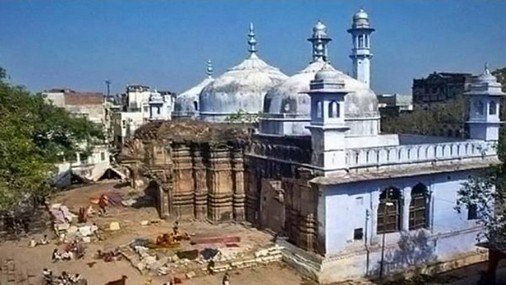
The latter is one of the oldest spiritual beliefs that have been linked to the Gyan Vapi well, which supposedly has an underground link to the sacred River Ganga. Ganga is not a river but a god that removes karma and liberates souls and Hindu cosmology. The Gyan Vapi myth that links the well with Ganga under the ground makes the well more than a historical relic, it is the route to sacred power. This is a belief that is heavily symbolic in the spiritual. It assumes that although the various divinity remains invisible, it is still intertwined with the timeless movement of cosmic consciousness. Like the Ganga is invisibly flowing under the land and then showing itself in sacred places, spiritual truth also has its course, not to be disturbed by visible things.
Gyan vapi and the Philosophy of Hidden Divinity.
The philosophical interpretation of Gyan Vapi goes deep into the Hindu philosophy. The well symbolizes the concept that divinity does not vanish behind the clouds, it simply goes back into itself. Spiritual energy does not disappear when there is chaos but becomes subtle.
This allegory speaks with those who are on an inner quest. Gyan Vapi is a reminder of how wisdom and truth are usually hidden under circumstances and only dealt with with patience, reverence, and stillness of the mind. The well itself is turned into a symbol of human soul where the divine knowledge is hidden behind the surface and can be fulfilled only.

Rituals and Holy Limits.
Historically, the well of the Gyan Vapi has been closed off and its sanctity has been taken seriously. These taboos are not considered denial but are considered safeguarding, that is, their spiritual purity is not harmed. Not every sacred space in Hindu tradition is supposed to be traversed: there are sacred spaces that are supposed to be meditated upon.
This is the assumption that supports the notion that the genuine spiritual relationship is not necessarily tied to physical location. Religion, will, and consciousness tend to go beyond the physical reach thus Gyan Vapi is a strong exemplar of spiritual restraint.